Aug. 11, 2026

6 Home Buying Red Flags Buyers Miss

Aug. 10, 2026

Is Professional Photography Worth It Selling in Orlando?

Is professional photography worth it when selling a house in Orlando?

Yes, professional listing photography is worth it for nearly every Orlando seller. In a market where the most recent data shows homes sitting 63 to 70 days before going under contract, your photos are doing the job of generating showings before a single buyer walks through the door. Weak photos mean fewer clicks, fewer showings, and a longer time on market that gives buyers leverage to negotiate your price down.

Here's the thing most sellers don't realize: buyers are making a decision about whether to schedule a showing based on your listing photos before they ever read a single word of the description. If those photos don't stop the scroll, you've already lost that buyer.

I've been selling homes in Orlando and Central Florida for more than 21 years, and I can tell you the listings that generate the most showing activity in the first week are almost always the ones with the strongest photography. That first week matters enormously. As I tell every seller I work with, pricing your home right from day one and presenting it at its absolute best at launch are the two things that have the biggest impact on your final sale price and timeline.

What the Orlando market data actually tells you right now

According to Realtor.com's June 2026 market snapshot, the median sale price in Orlando was $425,000, with a median of 70 days on market. At the Orange County level, the June 2026 figures show a median sale price of $465,000 and 63 days on market.

That's a meaningful amount of time for your home to sit. Every additional week on market costs you in carrying costs, negotiating leverage, and seller anxiety. The listings that move faster in this environment are the ones that create urgency, and urgency starts with presentation.

Market Median Sale Price (June 2026) Median Days on Market (June 2026)
Orlando, FL $425,000 70 days
Orange County, FL $465,000 63 days

Source: Realtor.com, June 2026. Most recent available data as of August 2026.

If you want to understand what's driving these timelines, I break it down further in this post on why Orlando homes are taking longer to sell. The short version: buyers have more options and more time to be selective. Your listing has to earn attention.

What professional photos actually change

Professional real estate photographers do several things a smartphone, or even a talented amateur, typically can't replicate at listing quality:

  • Wide-angle lenses that show room scale accurately without distorting proportions
  • HDR bracketing and flash blending that balances bright Florida windows with interior exposure, one of the hardest things to get right in a sunny state
  • Twilight and exterior shots that make curb appeal photos pop on portal listings
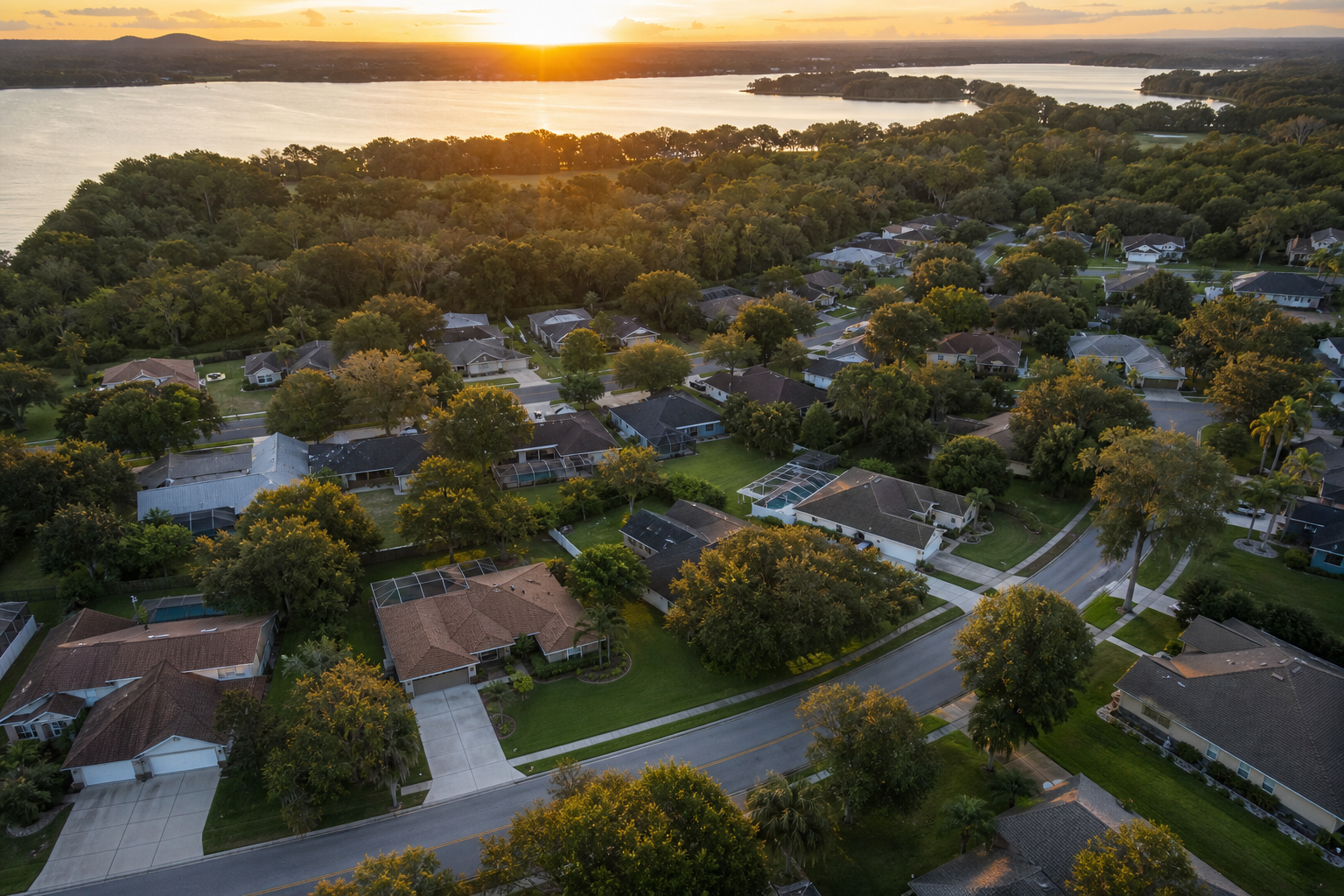
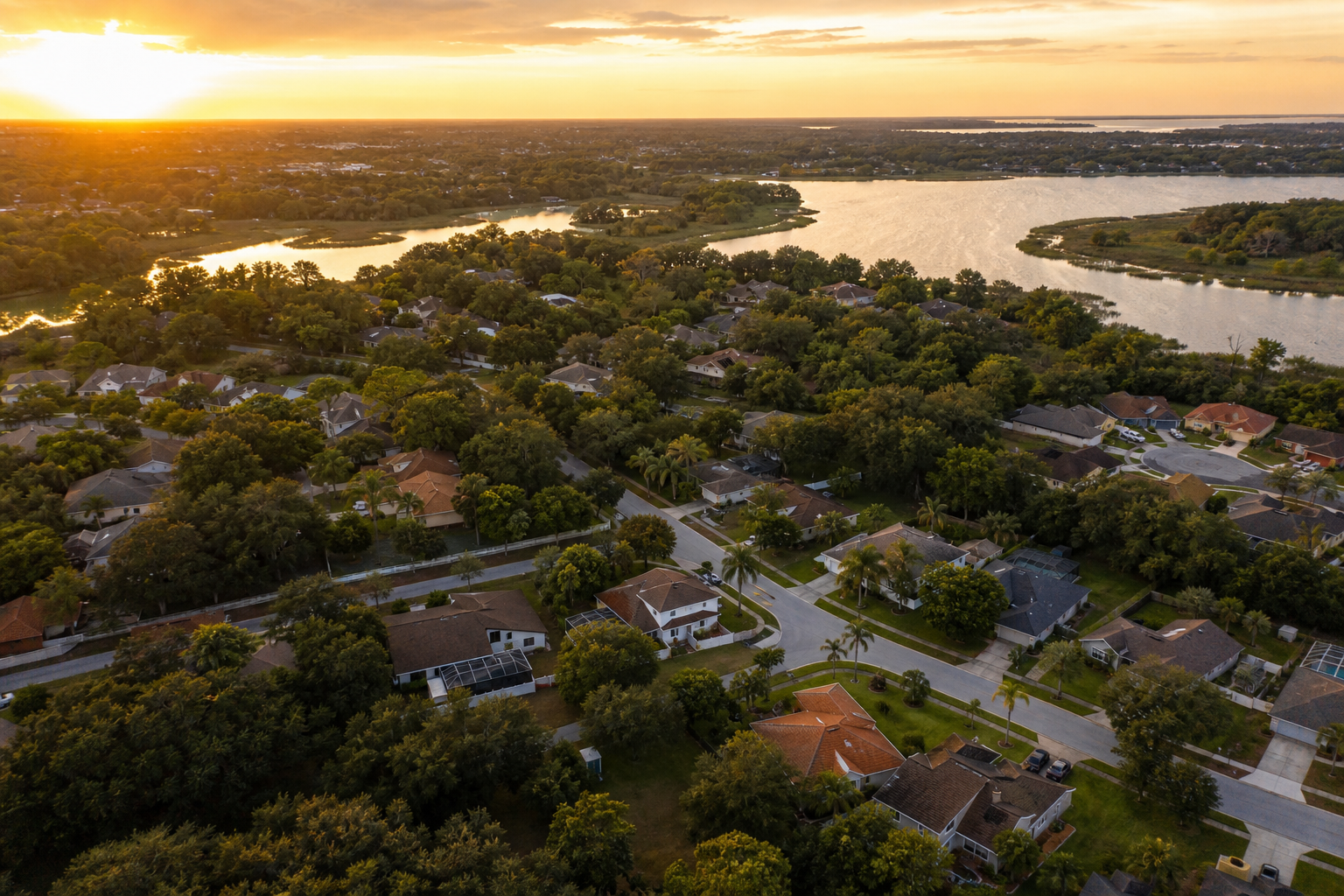
  • Aerial/drone photography for homes on larger lots, waterfront, or with community amenities nearby, relevant across Windermere, Horizon West, and Lake Nona
  • Post-processing that corrects color, removes minor distractions, and ensures every room looks its best

The National Association of REALTORS® has consistently found that the overwhelming majority of buyers start their home search online. That means your photos are your first showing, and for most buyers, they're deciding whether to schedule an in-person visit based entirely on what they see on a screen.

The showing volume connection

More showings in the first week creates competition. Competition creates urgency. Urgency is what gets you offers at or above asking price rather than below it.

I don't show up to a listing appointment with a sales pitch, I show up with a business plan. Part of that plan is always a marketing strategy built around strong photography, because the first few weeks on market generate the most buyer interest. If the photos aren't strong enough to drive showing volume during that window, you're already playing catch-up.

What to do before the photographer arrives

Professional photography amplifies what's already there. It won't save a cluttered, unprepared home, it'll just document it in higher resolution. Here's what I walk my sellers through before the shoot:

  • Declutter every room. Countertops, shelves, and surfaces should be nearly bare. Buyers are imagining their stuff in the space, not admiring yours.
  • Deep clean. Floors, windows, appliances, bathrooms. Florida light is beautiful and unforgiving, it shows everything.
  • Curb appeal first. Mow, edge, mulch, and pressure-wash. The exterior shot is the first photo most buyers see on any portal listing.
  • Address obvious cosmetic issues. Fresh paint on scuffed walls, replaced light bulbs, tightened cabinet hardware. These are low-cost, high-visibility fixes.
  • Stage key rooms. Living room, primary bedroom, and kitchen matter most. If you've already moved out, discuss virtual staging with your agent.

One important note for Florida sellers: the prep you do for photos should align with your disclosure obligations, not contradict them. Under Florida's disclosure standard, established through Florida Supreme Court case law, sellers must disclose known facts that materially affect the value of the property and are not readily observable by the buyer. Cosmetic staging is fine. Concealing a known defect is not. Your marketing images should present the home honestly, and your Seller's Property Disclosure should reflect what you actually know about the home's condition.

If your home has flood history, Florida now requires a flood disclosure to be provided before or at contract signing, covering whether the property is in a flood zone and whether you've filed flood-related insurance claims or received federal disaster assistance. That disclosure lives alongside your photos, not instead of them. For homes built before 1978, the EPA's lead-based paint disclosure requirements also apply regardless of how well the home photographs.

Is virtual staging worth it in Orlando?

For vacant homes, virtual staging is almost always worth considering. An empty room photographs poorly, it's hard for buyers to gauge scale, and vacant homes can feel cold and uninviting even in a great neighborhood. Virtual staging adds digitally rendered furniture to photos at a fraction of the cost of physical staging.

The caveat: virtual staging must be clearly labeled as such in the listing, and the photos should be accurate to the room's actual condition. Don't virtually stage over a damaged floor or a ceiling stain, that creates problems when buyers arrive for a showing and the room doesn't match the photos.

For occupied homes, physical staging (or at minimum, a staging consultation) tends to produce better results because the photos and the showing experience match. I work with sellers throughout Ocoee, Winter Garden, Dr. Phillips, Horizon West, and across Central Florida to identify which approach makes the most sense for their specific property and price point.

If you're weighing your overall readiness to list, this post on whether it's a good time to sell in Central Florida gives you the broader market context to make that call.

Frequently Asked Questions

Do professional listing photos actually help a house sell faster in Orlando?

Yes, and the mechanism is straightforward: better photos drive more online clicks, more clicks generate more showing requests, and more showings in the first week create the competitive pressure that produces strong offers. In Orlando's current market, where the most recent June 2026 data from Realtor.com shows homes sitting 63 to 70 days on market, anything that compresses that timeline is worth taking seriously. The listings I've seen move fastest are almost always the ones that launched with strong photography and a complete marketing strategy.

How much do professional photos matter versus staging in Central Florida?

They work together, not against each other. Staging creates the scene; photography captures it in a way that translates to a screen. A beautifully staged home photographed with a smartphone will still underperform online compared to the same home shot by a professional. For most Central Florida sellers, the right answer is to do both, stage to the level your price point warrants, then invest in professional photography to make sure that preparation shows up in every portal listing.

What should Orlando sellers fix before taking listing photos?

Focus on what the camera will catch: curb appeal, clean windows, decluttered surfaces, fresh paint on scuffed walls, and working light fixtures throughout. Florida's bright natural light is an asset in photos, but it also highlights dirt, clutter, and deferred maintenance. The goal is to present the home at its honest best, not to conceal anything that would need to be disclosed under Florida's seller disclosure standard, which requires disclosure of known defects that materially affect value and aren't obvious to a buyer.

Does Florida require a Seller's Property Disclosure form?

Florida does not mandate a single universal disclosure form the way some states do. However, sellers have a legal duty under Florida case law to disclose known facts that materially affect the value of the property and are not readily observable. In practice, Orlando sellers typically complete a Seller's Property Disclosure form as part of the transaction. Additionally, Florida now requires a separate flood disclosure before or at contract signing for residential properties, and federal law requires a lead-based paint disclosure for homes built before 1978 per EPA requirements.

Who pays the Florida Documentary Stamp Tax when selling a house in Orange County?

The Florida Documentary Stamp Tax is a state transfer tax applied to deeds at a rate of $0.70 per $100 of consideration statewide (with a different rate in Miami-Dade County). Who bears this cost is commonly negotiated between buyer and seller and confirmed in the purchase contract, there is no universal rule that one party always pays it. Your title company or closing agent handles collection and recording. Confirm how it's allocated in your specific contract with your closing officer or attorney.

How many showings should a well-presented Orlando listing get in the first week?

There's no single benchmark that applies to every price point, neighborhood, and condition, but a well-priced, well-photographed home in the Orlando area should generate meaningful showing activity in the first seven to ten days. If a listing is getting very few or no showings in that window, it's usually a signal of a pricing issue, a presentation issue, or both. That first week is when buyer interest peaks, which is exactly why marketing has to be strong before the home goes live, not after.


The bottom line: professional photography is one of the lowest-cost, highest-impact decisions you can make before listing your Orlando home. In a market where buyers are browsing dozens of listings online before scheduling a single showing, your photos are doing the selling before you ever meet a buyer in person.

I build a full marketing plan for every listing I take, photography, prep strategy, pricing, and launch timing, because all of those pieces work together. If you're thinking about selling in Orlando, Ocoee, Winter Garden, Windermere, or anywhere across Central Florida, I'd like to walk you through exactly what that looks like for your home. Schedule a consultation with me here and let's build your plan.

About Eve Metlis

Eve Metlis is a third-generation Florida REALTOR®, a top 1% Orlando and Central Florida REALTOR®, and leader of the Eve Metlis Team at Watson Realty Corp. With more than 21 years of experience, she has helped buyers and sellers throughout Orlando, Ocoee, Winter Garden, and Central Florida, closing over 715 homes and more than $208 million in lifetime sales.

Watson Realty Corp. · 407-493-5225

Equal Housing Opportunity. Eve Metlis is licensed with Watson Realty Corp., regulated by the Florida Department of Business and Professional Regulation (DBPR). This article is general information only and is not legal, tax, or financial advice. Readers should confirm all costs, disclosures, and transaction details with their attorney, tax advisor, lender, or closing officer. ALL INFORMATION IS DEEMED RELIABLE BUT NOT GUARANTEED; MEASUREMENTS ARE APPROXIMATE AND BUYERS OR THEIR AGENTS SHOULD VERIFY ALL CRITICAL DETAILS.

Posted in For Home Sellers
Aug. 7, 2026

Buyer's Agent Commission in Florida: Orlando Seller FAQ

Do I have to pay the buyer's agent commission when selling my home in Florida?

No Florida statute requires you to pay a buyer's agent commission. Whether you contribute to a buyer's broker's compensation, how much, and how it is structured are all negotiable, governed by your listing agreement and the purchase contract, not by state law. Since the 2024 NAR settlement, the rules around how buyer-agent compensation is offered and disclosed have changed significantly, and every Orlando-area seller needs to understand what that means before signing a listing agreement.

What Changed After the 2024 NAR Settlement (and What Didn't)

Here's what I tell every seller who asks me this: the rules changed, but buyer representation didn't go away. Understanding the difference matters a lot for your bottom line.

Before 2024, most MLSs required listing brokers to include an offer of compensation to buyer brokers directly in the MLS listing. That offer became the de facto starting point for how a buyer's agent got paid at closing. According to the National Association of REALTORS®, those MLS compensation fields are now gone. Listing brokers participating in REALTOR® MLSs may no longer post offers of compensation to buyer brokers in the MLS itself.

What did NOT change: sellers can still agree to pay or contribute to buyer-broker compensation. That agreement just happens outside the MLS now, through your listing agreement, the purchase and sale contract, or both. The Florida Realtors® association has been clear with its members that both who pays and how much are negotiable and must be spelled out in writing.

Florida law has never mandated seller-paid buyer commissions

This is important context. Florida Statutes, Chapter 475, which governs real estate licensing and brokerage, does not assign commission obligations to either side of a transaction. Compensation is purely contractual. The Florida Real Estate Commission (FREC) regulates licensing and professional conduct, but it does not set commission structures or require that sellers pay any particular agent.

In other words, what many sellers experienced as a "standard" practice was always a market convention, not a legal requirement. The 2024 settlement simply made that reality more visible.

What buyers are doing differently now in Orlando

Since the rule changes rolled out in 2024 and 2025, Orlando-area agents are required to have buyers sign written buyer-broker agreements before touring homes. These agreements specify how the buyer's agent will be compensated, including the possibility that the buyer pays directly or asks the seller to contribute at closing through concessions. The Orlando Regional REALTOR® Association and national surveys from NAR both reflect this shift as a consistent 2025-2026 trend.

In practice, most buyers in Central Florida still come to the table with representation. Un-represented buyers remain a minority. That means you will likely receive offers from buyers whose agents expect to be paid somehow, and how that gets structured is now an explicit negotiation item, not a background assumption.

How Buyer-Agent Compensation Actually Works in an Orlando Transaction

I don't show up to a listing appointment with a sales pitch. I show up with a business plan, and part of that plan is walking you through exactly how compensation is handled before you sign anything.

Here is how the mechanics typically work in Central Florida:

The listing agreement

Your listing agreement with your brokerage specifies the total broker compensation you agree to pay the listing brokerage. That agreement may also state whether and how your brokerage will share compensation with a cooperating buyer's broker. This is where the conversation starts. Broker fees and commissions are fully negotiable and are not set by law. There is no standard, typical, or fixed rate, and any agent who implies otherwise is not being straight with you.

Most Orlando-area listing agreements from major brokerages show sellers how any anticipated buyer-broker compensation affects their estimated net proceeds before they sign. If yours doesn't, ask.

The purchase and sale contract

Orlando agents commonly use the Florida Realtors®/Florida Bar "AS IS" Residential Contract for Sale and Purchase. That form does not hard-wire any commission or require the seller to pay the buyer's agent. Compensation is handled through separate broker agreements and reflected on the closing statement.

A buyer can also negotiate for seller-paid closing cost concessions that effectively allow the buyer to pay their own agent. This is a common structure in 2026, and it is worth understanding before you receive an offer. For more on how concessions factor into your net proceeds, see my post on how to sell your Central Florida home without losing thousands in concessions.

The closing statement

In Florida, a title company or real estate attorney typically serves as the closing agent, handling escrow, preparing the settlement statement, issuing title insurance, and recording the deed. According to the Florida Land Title Association, the closing agent disburses broker commissions and any buyer-agent compensation at closing according to signed closing instructions and the settlement statement, regardless of whether those funds originate from seller proceeds or buyer cash.

In counties like Orange, Seminole, Osceola, and Lake, local practice often has the seller selecting the title company. Per the Orlando Regional REALTOR® Association, sellers in these counties often pay for the owner's title insurance policy as well, though this is contract-dependent and negotiable. Every line item on that closing statement, including any buyer-agent compensation, is finalized in writing before closing day.

Questions to ask before you sign a listing agreement

Based on guidance from the Orlando Regional REALTOR® Association and Florida Realtors®, here are the specific questions every Central Florida seller should ask:

  • Does this listing agreement contemplate cooperating broker compensation, and under what conditions?

  • How will your brokerage market the listing to buyers' agents given that MLS compensation fields no longer exist?

  • If a buyer requests that I contribute to their agent's fee through seller concessions, how will that appear on the closing statement?

  • How does any anticipated buyer-broker compensation affect my estimated net proceeds?

  • What happens if a buyer comes in unrepresented or agrees to pay their own agent directly?

Your specific answers depend on your home's price, condition, location, and the current state of buyer demand in your neighborhood. That's exactly the kind of conversation I walk my clients through before we even list.

A few other closing costs worth knowing about

While you're reviewing your listing agreement and net sheet, two other line items often come up alongside compensation discussions.

Florida's Documentary Stamp Tax on deeds, governed by Chapter 201, Florida Statutes, is a tax due based on the consideration paid when real property is transferred. The tax rate is fixed by statute and cannot be negotiated. Who pays it, however, is negotiable and is typically set in the purchase and sale contract. Per the Florida Department of Revenue, local custom in many counties has the seller paying this tax, but that is not a statutory requirement.

Seller's property disclosure is a separate but related topic. Florida does not have a single mandatory state-issued disclosure form, but the Florida Supreme Court's decision in Johnson v. Davis, 480 So.2d 625 (Fla. 1985), established that sellers must disclose known material defects that are not readily observable. Most Orlando-area listings use the Florida Realtors® Seller's Property Disclosure form as best practice, and local forms include detailed questions about water intrusion, roof condition, settlement or sinkhole activity, and past insurance claims, all of which are relevant in Central Florida's climate.

If your home was built before 1978, federal law under the Residential Lead-Based Paint Hazard Reduction Act (Title X) requires you to provide buyers with an EPA-approved brochure, disclose known lead-based paint hazards, and include specific warning language in the contract. This applies in Florida and is incorporated into standard Orlando contracts via addenda.

When you're thinking through all of this alongside how to position your listing, it also helps to read my post on the top 10 qualities Orlando sellers should look for in a listing agent.

Cost or Fee Category Fixed by Law or Negotiable? Who Typically Pays in Central Florida? Listing broker compensation Fully negotiable (not set by law) Agreed in listing agreement with seller Buyer-broker compensation Fully negotiable (not set by law) Seller, buyer, or shared, set in contract Documentary Stamp Tax on deed Rate is fixed by statute; who pays is negotiable Often seller by local custom, but contract-dependent Owner's title insurance Negotiable Often seller in Orange, Seminole, Osceola, Lake counties, but varies Lender's title insurance Negotiable Often buyer (required by lender) Recording fees Set by county Buyer typically pays to record mortgage/deed HOA estoppel fee Capped by Florida Statutes § 720.30851 Typically seller, per Florida Realtors® contract guidance

All allocations above are commonly negotiated between the parties and should be confirmed in your specific purchase and sale contract. Verify your own numbers with your closing agent, attorney, or tax advisor.

Frequently Asked Questions

In Florida, am I legally required to pay the buyer's agent commission, or is that just local custom?

It is not a legal requirement. Florida Statutes, Chapters 475 and 689, do not mandate that a home seller pay a buyer's broker or agent. Compensation arrangements are governed by private contracts, including your listing agreement and the purchase and sale contract. What felt like a standard practice for years was always a market convention, not a statutory obligation.

How will the buyer's agent get paid in Orlando now that MLSs can't show commission offers?

Since the 2024 NAR settlement rule changes, listing brokers in REALTOR® MLSs may no longer post compensation offers in the MLS. However, sellers can still agree to pay or contribute to buyer-broker compensation through the listing agreement or the purchase contract. Alternatively, buyers may pay their own agents directly or negotiate seller concessions to cover that cost at closing. The Orlando Regional REALTOR® Association confirms this is now handled transaction by transaction, in writing.

What should I ask my listing agent in Central Florida about buyer-broker compensation before I sign?

Ask whether the listing agreement contemplates cooperating broker compensation and under what conditions, how any buyer-agent contribution will appear on your closing statement, and how it affects your estimated net proceeds. Also ask how the brokerage plans to communicate your willingness (or not) to contribute to buyer-agent fees, given that MLS fields can no longer carry that information. Florida Realtors® and the Orlando Regional REALTOR® Association both advise sellers to have these conversations in writing before signing.

Can a buyer in Florida agree to pay their own agent and still ask me to cover part of that fee through seller concessions?

Yes. A buyer can sign a buyer-broker agreement specifying they will pay their own agent, and then submit an offer that includes a request for seller-paid closing cost concessions. Those concessions could be used to offset the buyer-agent fee. Whether you agree to that structure depends on the offer price, your market position, and competing offers. This is a common negotiation pattern in Central Florida in 2026, and it is worth discussing with your listing agent before you receive offers.

Will refusing to pay a buyer's agent make my Orlando listing less competitive?

It depends on your price point, your market, and how your listing is positioned. The Orlando Regional REALTOR® Association notes that buyer representation remains the norm in Central Florida, and most buyers come with agents who expect to be compensated. In slower market segments, sellers who offer no contribution to buyer-agent costs sometimes see fewer showings or more aggressive price negotiations. In competitive price brackets, sellers who structure compensation clearly tend to attract stronger offers. Your listing agent can walk you through what is working in your specific neighborhood right now.

The Bottom Line for Orlando Sellers

You are not legally required to pay a buyer's agent commission in Florida. But how you handle that negotiation, and what you agree to in writing, directly affects your net proceeds and your pool of buyers. The rules changed in 2024, and sellers who go into a listing without understanding the new landscape leave money on the table.

I walk every client through a full business plan before we list, including a clear picture of how compensation is structured, what buyers in your price range are requesting, and how to position your home to attract the strongest offers. If you're getting ready to sell in Orlando, Ocoee, Winter Garden, Windermere, or anywhere in Central Florida, let's talk before you sign anything.

Schedule a no-obligation seller consultation with the Eve Metlis Team: Request your free consultation here.

About Eve Metlis

Eve Metlis is a third-generation Florida REALTOR®, a top 1% Orlando and Central Florida REALTOR®, and leader of the Eve Metlis Team at Watson Realty Corp. With more than 21 years of experience, she has helped buyers and sellers throughout Orlando, Ocoee, Winter Garden, and Central Florida. Eve has sold over 715 homes and closed more than $208 million in lifetime sales, building her business on proven real estate strategies, exceptional client service, and a results-driven approach.

Watson Realty Corp. · 407-493-5225

Equal Housing Opportunity. Eve Metlis is licensed in Florida and regulated by the Florida Department of Business and Professional Regulation (DBPR). This article is provided for general informational purposes only and does not constitute legal, tax, or financial advice. All information is deemed reliable but not guaranteed. Buyers and sellers should verify all critical details and confirm their own transaction costs with their attorney, tax advisor, lender, or closing/escrow officer.

Posted in For Home Sellers
Aug. 5, 2026

What Will I Net Selling My House in Central Florida?

How do I figure out what I'll actually walk away with when I sell my Orlando home?

Your net proceeds are your contract price minus every cost deducted before the wire hits your account: your mortgage payoff, broker commission, Florida Documentary Stamp Tax on the deed, title and settlement fees, prorated property taxes, HOA estoppel and dues, and any concessions or credits you've agreed to give the buyer. The structure is the same whether you're selling a $400,000 townhome in Ocoee or a $750,000 pool home in Windermere, but the exact dollar on every line is unique to your property, your loan balance, and your contract terms.

What Gets Deducted on a Florida Seller Net Sheet

Here's what I walk every seller through before we even talk about list price. Understanding the categories first keeps you from being surprised at the closing table.

Your mortgage payoff (and any liens)

This is usually the largest deduction. Your payoff is not your current statement balance, it includes per-diem interest through the projected closing date and any prepayment fees. If you have a home equity line of credit or a second mortgage, those pay off at closing too. Your lender provides an official payoff quote; I always recommend ordering it early so there are no surprises on the settlement statement.

Broker commission

Broker fees are fully negotiable and not set by lawthere is no standard, typical, or customary rate. The listing-side fee is agreed to in your listing agreement. Any compensation a seller chooses to offer a buyer's agent is optional and separately negotiated; it is not automatically part of the transaction, and offers of compensation are no longer shared on the MLS. If you want to know what commission would look like for your specific sale, that's a conversation to have directly with me before you sign anything.

Florida Documentary Stamp Tax on the deed

Florida imposes a Documentary Stamp Tax on deeds at a statutory rate of 70 cents per $100 of consideration (or fractional part). This rate is set by state law and applies uniformly across Orange, Seminole, Lake, Osceola, Polk, and every other Central Florida county when property is transferred. According to the Florida Department of Revenuethere are no county add-ons to this particular deed tax, it's the same statewide.

Who pays it? The Florida Bar's consumer guidance notes that under the standard Florida Realtors/Florida Bar residential contract, Doc Stamps on the deed are commonly charged to the seller, but this is a matter of contract and can be negotiated between the parties. Confirm how it's allocated in your specific purchase agreement.

Title insurance and settlement/closing fees

In the Orlando and Central Florida market, closing happens through a title company or real estate attorney acting as the settlement agent. That company handles the title search, coordinates lender documents, and prepares the Closing Disclosure or settlement statement.

Who pays which title fees depends on which contract option is selected and how it's negotiated. In many Central Florida transactions, the seller chooses the title company and pays the owner's title insurance premium and the settlement fee. In other scenarios, the buyer selects the closing agent and covers those costs. This is negotiable, don't assume one way or the other until you've read your contract.

The Stellar MLSwhich covers most of Central Florida, is the data backbone local agents and title companies use when preparing pre-listing net sheet estimates.

Prorated property taxes

Florida property taxes are paid in arrears, which means at closing you'll owe the buyer a credit for the portion of the current tax year that you owned the home. The exact proration depends on your county's millage rate and the closing date. For Orange County properties, assessed values and millage breakdowns are available through the Orange County Property Appraiser. For homes in Lake, Osceola, or Polk counties, check those counties' respective property appraisers for the figures your title company will use.

This line can move meaningfully depending on whether you close in January versus November, a later closing date means a larger tax proration credit to the buyer.

HOA estoppel fees, dues, and special assessments

If your home is in a community with a homeowners association, and in master-planned communities like Lake Nona, Horizon West, Waterleigh, or Stoneybrook West, it almost certainly is, your closing will include an HOA estoppel certificate fee and a proration of dues. Under Florida Realtors legal guidancethe estoppel certificate is the official document that confirms what you owe the association at closing. If there are any outstanding balances or special assessments, those appear on your net sheet too.

Buyer concessions and repair credits

Any credits you've agreed to give the buyer, for repairs, closing cost assistance, or price adjustments after inspection, come directly off your net. This is one of the most variable lines on the sheet and one of the most negotiable. I covered this in detail in my post on handling inspection repairs and buyer concessions in Central Floridaworth reading before you go under contract.

The Net Sheet Structure at $400K, $500K, and $750K

I can't publish dollar amounts for your costs here, every line depends on your loan balance, your HOA, your county's millage rate, your contract terms, and what you negotiate. What I can show you is the structure a Central Florida title company uses, so you know exactly what to expect when your agent or closing officer prepares your actual estimate.

Net Sheet Line Item $400K Sale $500K Sale $750K Sale
Contract Purchase Price Your contract price Your contract price Your contract price
Mortgage Payoff(s) Varies by balance Varies by balance Varies by balance
Broker Commission Negotiated in listing agreement Negotiated in listing agreement Negotiated in listing agreement
FL Doc Stamp Tax on Deed (statutory: $0.70/$100) Calculated on final price Calculated on final price Calculated on final price
Owner's Title Insurance Premium Per contract allocation Per contract allocation Per contract allocation
Title Settlement/Closing Fee Per contract allocation Per contract allocation Per contract allocation
Prorated Property Taxes Depends on closing date & county millage Depends on closing date & county millage Depends on closing date & county millage
HOA Estoppel Fee & Dues Proration Varies by community Varies by community Varies by community
Buyer Concessions / Repair Credits Negotiated in contract Negotiated in contract Negotiated in contract
Estimated Net Proceeds Calculated by title company Calculated by title company Calculated by title company

The only way to get a real number is to run the actual figures. When I sit down with a seller, I don't show up with a sales pitch, I show up with a business plan, and that plan includes a preliminary net sheet built on your specific loan balance, your HOA documents, your county's current millage rate, and a realistic read of what the market will bear on price and concessions.

Why list price and net proceeds are not the same number

This is the conversation I have with nearly every seller before we go live. Your list price is a marketing number. Your contract price is what a buyer agrees to pay. Your net proceeds are what's left after every deduction above. The gap between list price and cash in hand can be significant, and it's different at $400K than at $750K, because some costs scale with price (Doc Stamps, commission) while others are relatively flat (settlement fees, estoppel).

Pricing your home right from day one matters here, too. If you overprice and then chase the market down with reductions, you don't just lose time, you often end up with a lower contract price and more buyer leverage on concessions. That double hit narrows your net more than most sellers expect. I wrote about this directly in my post on why Orlando sellers need to stop pricing like it's 2022.

The 2026 Central Florida market context

According to Realtor.com's 2026 National Housing ForecastU.S. existing-home prices are projected to rise modestly by about 2.2% in 2026, with national supply forecast to increase roughly 9% year-over-year, moving the market closer to balanced conditions at around 4.6 months of supply. Those are national figures. Central Florida's trajectory can differ materially, which is why neighborhood-level knowledge matters more than any national headline when you're deciding on price and timing. Your net sheet has to be built on what's actually happening in Ocoee or Dr. Phillips or Clermont right now, not on a national average.

Seller Disclosure: What You're Required to Tell Buyers in Florida

This doesn't show up on the net sheet as a dollar line, but it absolutely affects your liability and your closing. Florida does not have a single mandatory state-form disclosure statute for all residential sales, but sellers are legally obligated to disclose known material defects that are not readily observable to the buyer. This obligation comes from Florida case law, most notably Johnson v. Davisand from general fraud principles. The Florida Bar's consumer pamphlet on buying a home covers this clearly.

In Central Florida specifically, failure to disclose known issues, sinkhole activity, past flooding, major structural problems, is a real litigation risk. Buyers and their agents take disclosures seriously here. I always advise sellers to be thorough and honest; the cost of a disclosure conversation is nothing compared to the cost of a post-closing dispute.

Frequently Asked Questions

What costs get deducted from my sale price on a Florida seller net sheet?

The main deductions are your mortgage payoff(s), broker commission (negotiated in your listing agreement), Florida Documentary Stamp Tax on the deed at the statutory rate of $0.70 per $100 of the sale price, title insurance and settlement fees (allocation depends on your contract), prorated property taxes through closing, HOA estoppel fees and dues proration, and any buyer concessions or repair credits negotiated in the contract. Every line is specific to your transaction, a title company prepares the final figures.

In Central Florida, who pays the title company fees and owner's title insurance?

It depends on the contract. In many Central Florida transactions, the seller selects the title company and pays the owner's title insurance premium and the settlement fee. In other scenarios, the buyer chooses the closing agent and those costs shift accordingly. This is a negotiable term in the Florida Realtors/Florida Bar contract, confirm how it's allocated in your specific agreement before assuming anything.

How does the Florida Documentary Stamp Tax affect my net when I sell in Orlando?

Florida's Documentary Stamp Tax on deeds is set by state law at 70 cents per $100 of the sale price (or any fractional part), and it applies uniformly across every Central Florida county, including Orange, Seminole, Lake, Osceola, and Polk. Under the standard residential contract, this cost is commonly charged to the seller, though it is negotiable. The title company calculates the exact amount based on your final contract price.

Are property taxes and HOA dues prorated at closing when I sell in Orange or Seminole County?

Yes. Florida property taxes are paid in arrears, so at closing you'll owe the buyer a credit for the portion of the current tax year you owned the home. HOA dues are typically prorated as well, and the association issues an estoppel certificate confirming any outstanding balances or special assessments. The exact tax proration depends on your county's millage rate and the closing date, the Orange County Property Appraiser is the source your title company will use for Orange County properties.

If I still have a mortgage, how does the payoff show up on my seller net sheet?

Your mortgage payoff appears as a deduction from your gross sale proceeds on the settlement statement. It's not your current statement balance, it includes per-diem interest accrued through the projected closing date and any applicable fees. Your lender provides an official payoff quote, which the title company uses to calculate the exact deduction. If you have a HELOC or second mortgage, those pay off at closing too.

What's the difference between my list price, contract price, and cash in hand at closing?

Your list price is what you market the home for. Your contract price is what a buyer agrees to pay, which may be higher or lower after negotiation. Your net proceeds are what's left after all deductions, payoff, commission, taxes, title fees, concessions, and prorations, are subtracted from the contract price. The gap between list price and cash in hand can be substantial, which is why running a preliminary net sheet before you list is one of the most important steps in the selling process.

Get Your Personalized Net Sheet Before You List

The structure above tells you what to expect. The only number that actually matters is yours, built on your loan balance, your HOA, your county's millage rate, and a realistic contract price for your specific home in today's Central Florida market.

I prepare a detailed preliminary net sheet for every seller before we agree on a strategy. It's part of the business plan I bring to every listing appointment, and it's how you go into the sale knowing exactly what you're working with. Schedule a consultation with the Eve Metlis Team and we'll run your numbers together.

About Eve Metlis

Eve Metlis is a third-generation Florida REALTOR®, a top 1% Orlando and Central Florida REALTOR®, and leader of the Eve Metlis Team at Watson Realty Corp. With more than 21 years of experience, she has helped buyers and sellers throughout Orlando, Ocoee, Winter Garden, and Central Florida. Eve has sold over 715 homes and closed more than $208 million in lifetime sales, building her business on proven real estate strategies, exceptional client service, and a results-driven approach.

Watson Realty Corp. · 407-493-5225

Equal Housing Opportunity. Eve Metlis is licensed with Watson Realty Corp., regulated by the Florida Department of Business and Professional Regulation (DBPR). This article is general information only and is not legal, tax, or financial advice. All information is deemed reliable but not guaranteed. Readers should confirm their own costs, tax obligations, and transaction details with their attorney, tax advisor, lender, or closing officer. Broker fees and commissions are fully negotiable and not set by law.

Posted in For Home Sellers
Aug. 4, 2026

3 Mortgage Mistakes That Could Kill Your Home Approval

Aug. 3, 2026

Cost to Sell a House in Orlando: What You'll Net

What does it actually cost to sell a house in Orlando, and what will I net at closing?

Selling a home in Orlando involves a stack of closing costs - Florida's Documentary Stamp Tax on the deed, title company fees, prorated property taxes, HOA charges, mortgage payoff, and broker commission - that all come off your gross sale price before you see a dollar. The exact amount depends on your price point, your loan balance, your community, and how your contract allocates each cost. There is no universal number, but understanding every category puts you in control of the conversation before you ever sign a listing agreement.

Every Cost Category on an Orlando Seller's Closing Statement

Here's what I tell every seller who sits down with me before we list: your net proceeds aren't just your sale price minus your mortgage. There's a full stack of line items between those two numbers, and each one deserves a plain-English explanation.

Florida Documentary Stamp Tax on the Deed

This is the one cost that surprises sellers the most, because it's a state tax - not a fee someone invented. Florida's Documentary Stamp Tax on deeds is set by statute at 70 cents per $100 of the consideration (0.70%) for property located in a county. On a mid-range Orlando home, that's a meaningful line item.

Who pays it? The Florida Department of Revenue is clear that the tax is owed on the transaction regardless of who the contract assigns it to - the allocation is negotiable between buyer and seller, but the tax itself is not optional. In most Central Florida residential contracts, it is customary for the seller to pay the Documentary Stamp Tax on the deed, while the buyer pays the stamp tax on any new mortgage note. That said, Florida Realtors practice materials emphasize this is purely customary and subject to negotiation in every contract - confirm what your contract actually says.

Broker Commission

Per the Florida Real Estate Commission (FREC) and the Department of Business and Professional Regulation (DBPR), real estate commissions in Florida are fully negotiable and not set by law. There is no standard, typical, or customary rate - any broker who implies otherwise is wrong, and regulators have made clear that brokers setting uniform rates raises antitrust concerns.

What you agree to with your listing broker is spelled out in your listing agreement and then appears as a seller debit on your closing statement. Any compensation offered to a buyer's broker is a separate, optional decision - it is not automatically bundled in, and it is not shared on the MLS. Your listing-side fee and any buyer-agent compensation are two distinct conversations. If you want to know what commission would cost in your specific situation, that's a conversation to have directly with me - not something to estimate from a blog.

Owner's Title Insurance Premium

Florida uses a promulgated (state-regulated) rate structure for title insurance premiums, meaning the rate is set and doesn't vary between title companies for the same coverage amount. What is negotiable is who pays for the owner's policy. In many Central Florida counties, it is customary for the seller to provide the owner's title insurance policy as part of the deal - but this is contract-driven, not legally required. In some transactions, especially in certain counties or with certain buyers, the buyer pays. Your contract controls.

Title Company Closing, Escrow, and Administrative Fees

Unlike the title insurance premium, the settlement, escrow, and administrative fees charged by the title company are not regulated - they vary by provider. A standard Orlando closing handled by a title company will generate line items for the settlement fee, wire fees for sending payoffs to your lender, document preparation, and sometimes courier or overnight fees. These are legitimate costs, and shopping title companies is allowed (and smart), though in many contracts the party who selects the title company also bears some influence over which provider is used.

Recording Fees

The county clerk records the new deed and any mortgage satisfactions. Recording fees are set by the county and state - they're relatively modest but do appear on your closing statement. Orange County, Lake County, Osceola County, and the other counties that make up the Central Florida market each have their own clerk of courts; Orange County's property records are managed through the Orange County Property Appraiser and Clerk of Courts offices.

Prorated Property Taxes

Florida property taxes are paid in arrears, which means at closing you'll owe a credit to the buyer for the portion of the current tax year you owned the home. How that proration works depends on when you close.

  • Q1 closings (January–March): The prior year's tax bill is due by March 31. If you've already paid it, the buyer may owe you a reimbursement for their share of that year. If it's unpaid, the settlement statement will show a seller debit for your portion.
  • Q2–Q3 closings (April–September): The current year's tax bill hasn't been issued yet - Orange County typically mails bills in November. Your proration will be based on the prior year's amount or an estimated figure. I always flag this for my clients: it's an estimate, and the final bill could differ slightly.
  • Q4 closings (October–December): Once November bills are out, prorations use the actual current-year figure for precision. If you took an early-payment discount (common in Florida), the proration reflects what you actually paid.

The Florida Bar's Real Property, Probate and Trust Law section materials confirm that Florida closing practice credits the buyer for the seller's share of that year's taxes not yet paid, calculated as of the closing date.

HOA and Condo Association Fees

If your home is in one of the many master-planned communities around Orlando - Horizon West, Lake Nona, Waterleigh, Champions Gate, Stoneybrook West, or dozens of others - expect association-related line items on your closing statement. Florida Statutes Chapters 718 and 720 regulate estoppel certificate fees for condominiums and HOAs, capping what associations can charge for the estoppel certificate required at closing. Beyond estoppel fees, you may also see:

  • Prorated HOA dues for the current month or quarter
  • Transfer fees or application fees (who pays is negotiated in the contract)
  • Capital contribution or initiation fees for incoming buyers - in competitive markets, sellers sometimes agree to cover these, which adds a debit to your net sheet
  • Special assessment credits if an assessment has been levied but not yet paid

In older Orlando neighborhoods with no HOA — parts of College Park, some areas of Winter Park - these line items disappear entirely, simplifying your closing statement. In resort-oriented communities near the attractions corridor, they can multiply.

Mortgage Payoff and Existing Liens

For most sellers, the mortgage payoff is the single largest deduction from gross proceeds. Your Orlando title company will order a formal payoff statement from your lender that includes your principal balance, daily interest accrual through the payoff date, any prepayment penalties (more common on certain loan types), and lender wire/processing fees. If you have a second mortgage or HELOC, that gets paid off too.

Any recorded liens - HOA liens, municipal code enforcement liens, judgment liens - must also be cleared at closing. The title search will surface these, and your net sheet will reflect them. This is why preliminary net sheets are always estimates: payoff figures are time-sensitive, and the final number only locks in when the title company has current payoff statements and exact closing-date prorations in hand.

Seller's Property Disclosure

This one doesn't cost money directly, but it affects your net proceeds indirectly. Florida doesn't mandate a single state-issued disclosure form by statute, but sellers are bound by the Florida Supreme Court's ruling in Johnson v. Davis, 480 So. 2d 625 (Fla. 1985), which requires disclosure of known material defects that are not readily observable and materially affect value. Florida Realtors publishes a widely used Seller's Property Disclosure – Residential form that covers roof, HVAC, plumbing, electrical, structural issues, water intrusion, sinkhole activity, and HOA/condo matters.

I advise every seller I work with to complete this form thoroughly. A detailed, truthful disclosure protects you from post-closing disputes and reduces the chance a buyer uses undisclosed issues to renegotiate or walk away - both of which cost you money.

How These Costs Stack Up at Different Price Points

Rather than publishing dollar figures that won't apply to your specific situation, here's how I frame the cost stack for sellers at different price levels in the Central Florida market.

Cost Category Entry-Level Home Mid-Range Home Higher-End Home
Broker commission Negotiated; set in listing agreement Negotiated; set in listing agreement Negotiated; set in listing agreement
Documentary Stamp Tax on deed Statutory rate × sale price (customarily seller's) Statutory rate × sale price (customarily seller's) Statutory rate × sale price (customarily seller's)
Owner's title insurance Promulgated rate; payer negotiated Promulgated rate; payer negotiated Promulgated rate; payer negotiated
Title/settlement fees Varies by provider Varies by provider Varies by provider
Recording fees Small; set by county Small; set by county Small; set by county
Property tax proration Based on closing date and prior bill Based on closing date and prior bill Based on closing date and prior bill
HOA/condo fees & estoppel Varies; may be none if no HOA Common; varies by community Often multiple; resort/luxury HOAs can be significant
Mortgage payoff Largest deduction for most sellers Largest deduction for most sellers Largest deduction for most sellers
Agreed repairs or concessions Negotiated; can vary widely Negotiated; can vary widely Negotiated; can vary widely

The pattern holds across all three tiers: commission and mortgage payoff dominate, the Documentary Stamp Tax scales with price, and HOA-related fees depend entirely on your community. The only way to know your actual net is to run a real net sheet with current payoff figures, your specific tax proration, and the costs your contract allocates to you.

I don't show up with a sales pitch - I show up with a business plan. That plan starts with a detailed net sheet before you ever decide to list, so you're making a fully informed decision, not a guess.

If you want to understand how pricing strategy affects what ends up on that net sheet, read how to price your home right the first time in Orlando's shifting market - because a price reduction halfway through your listing period doesn't just cost time, it costs money.

For a broader picture of where the Central Florida market stands heading into the second half of 2026, the Realtor.com mid-July 2026 housing market update describes a moderate environment nationally, with Orlando neither among the sharply declining nor the hottest-growth markets. Zillow's July 2026 forecast projects roughly flat home value growth nationally for the remainder of 2026 - which means pricing and cost management matter more than ever for sellers who want to maximize what they walk away with.

You can also see how concession pressure affects net proceeds in how to sell your Central Florida home without losing thousands in concessions - another place where sellers leave money on the table without realizing it.

Frequently Asked Questions

What closing costs do sellers typically pay when they sell a house in Orlando?

Orlando sellers commonly see the following categories on their closing statement: broker commission (negotiated in the listing agreement), Documentary Stamp Tax on the deed (a Florida statutory rate, customarily allocated to the seller in most Central Florida contracts), owner's title insurance premium (payer is negotiable), title company settlement and escrow fees, recording fees, prorated property taxes and HOA dues, HOA estoppel certificate fees, and any agreed repairs or buyer concessions. Mortgage payoff is typically the largest single deduction. Every amount depends on your specific contract, community, and closing date - not a universal formula.

Who pays the Florida Documentary Stamp Tax on the deed in Central Florida - buyer or seller?

There is no Florida statute that assigns the Documentary Stamp Tax on the deed to either the buyer or the seller - the Florida Department of Revenue confirms the tax is owed on the transaction, but who pays it is negotiated in the contract. In most Central Florida residential resale transactions, it is customary for the seller to pay the deed stamp tax, while the buyer pays the stamp tax on any new mortgage note. That custom is not a legal requirement - your contract controls, so verify the allocation in writing.

How do property tax prorations work at closing if I sell my Orlando home mid-year?

Florida property taxes are paid in arrears, so at closing you'll owe the buyer a credit for the portion of the current tax year you owned the home. For closings in the spring or summer - before Orange County issues new tax bills in November - the proration is typically based on the prior year's tax amount or an estimate. That means the number on your closing statement is an approximation; the final bill arriving in November could differ slightly. Your title company will calculate this as of your exact closing date, and a local agent can walk you through the timing implications before you commit to a close date.

What fees does the title company charge a seller at closing in Orlando, and which are negotiable?

Title company fees on the seller's side typically include a settlement or closing fee, wire fees for sending payoffs to your lender, document preparation fees, and sometimes courier or overnight charges. Unlike the owner's title insurance premium - which is set by a Florida-promulgated rate - these administrative fees are unregulated and vary by provider. Who selects the title company (and therefore influences which provider is used) is often negotiated in the contract itself. Shopping title companies is permitted, and the differences in settlement fees can be meaningful.

Are real estate commissions in Florida standard, or can I negotiate them?

Commissions are fully negotiable in Florida - the Florida Real Estate Commission (FREC) and DBPR are explicit that there is no standard, typical, or customary rate, and that brokers setting uniform rates raises antitrust concerns. Your listing-side fee is agreed in writing in your listing agreement. Any compensation offered to a buyer's broker is a separate, optional decision - it is not automatic, and it is not advertised on the MLS. If you want to understand what commission would look like in your specific situation, that conversation happens directly with your agent, not on a blog.

What HOA or condo fees should I expect on my closing statement when I sell in Central Florida?

If your home is in a community governed by an HOA or condo association, expect at minimum an estoppel certificate fee (capped under Florida Statutes Chapters 718 and 720) and a proration of dues through the closing date. Depending on your community, you may also see transfer fees, application fees, or capital contribution/initiation fees - who pays each is negotiated in the contract. In larger master-planned communities around Orlando (Horizon West, Lake Nona, Champions Gate, and similar), these fees can multiply. In neighborhoods with no HOA, they disappear entirely.

The Bottom Line

Your net proceeds from selling an Orlando home are shaped by a specific stack of costs - some set by Florida statute, some by local custom, and several by what you negotiate in your contract. The only reliable way to know your number is a personalized net sheet built around your actual sale price, payoff balance, community, and closing date.

That's exactly where I start with every seller I work with. Schedule a consultation and I'll walk you through a detailed net sheet for your home - so you know what you're walking away with before you decide to list, not after.

About Eve Metlis

Eve Metlis is a third-generation Florida REALTOR®, a top 1% Orlando and Central Florida REALTOR®, and leader of the Eve Metlis Team at Watson Realty Corp. With more than 21 years of experience, she has helped buyers and sellers throughout Orlando, Ocoee, Winter Garden, and Central Florida. Eve has sold over 715 homes, closed more than $208 million in lifetime sales, and built her business by combining proven real estate strategies, exceptional client service, and a results-driven approach.

Watson Realty Corp. · 407-493-5225

Equal Housing Opportunity. Eve Metlis is licensed in Florida and regulated by the Florida Department of Business and Professional Regulation (DBPR). This article is general information only - not legal, tax, or financial advice. Confirm your specific costs, tax obligations, and net proceeds with your attorney, tax advisor, lender, or closing officer. ALL INFORMATION IS DEEMED RELIABLE BUT NOT GUARANTEED; MEASUREMENTS ARE APPROXIMATE AND BUYERS OR THEIR AGENTS SHOULD VERIFY ALL CRITICAL DETAILS.

Posted in For Home Sellers
July 28, 2026

Selling an Orlando Home? Stop Pricing It Like It’s 2022

July 27, 2026

Orlando Housing Market Update: More Homes, More Sales, Higher Prices

July 24, 2026

Golf Course Home, Under $525K, Four Seasons Orlando, 55+ Community, Kissimmee FL, Home Tour

July 24, 2026

No Wait to Build! 5-Bed Corner-Lot Home Under $775K in Hamlin / Horizon West

Posted in Sold Homes